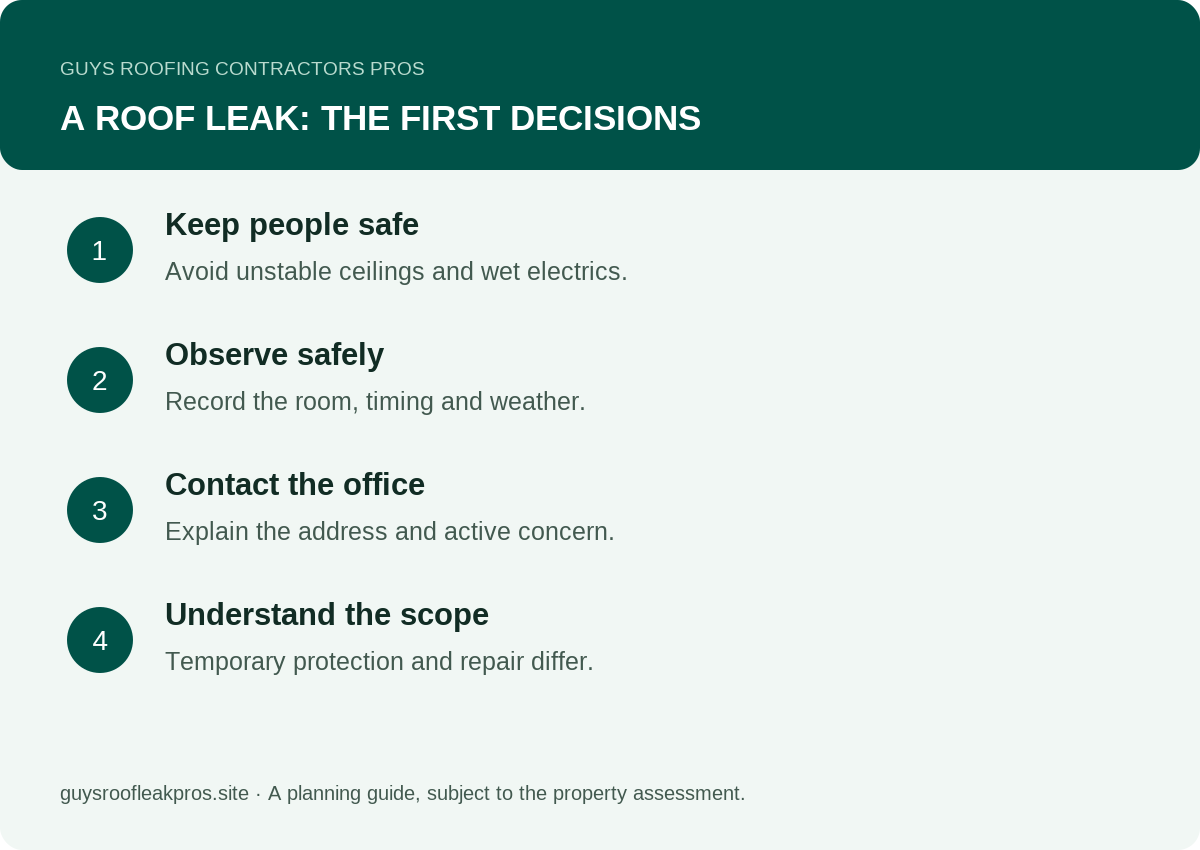
When you notice a roof leak, keep people away from the affected area, protect belongings only where it is safe and contact a roofer for an assessment. Record where and when water appears without climbing onto the roof. A ceiling stain shows where moisture became visible, but it does not identify the roof repair by itself.
A new drip raises two different questions. What can you safely do right now? And what needs to be inspected before someone proposes a repair? Keeping those questions separate helps you avoid taking a risk just to get a photograph or treating a temporary pause in dripping as proof that the problem has gone away.
You do not need to diagnose the roof before making the call. Useful observations and clear access arrangements give the roofer a better starting point than a guess about which shingle or flashing has failed.
What should you do first inside the house?
Keep people clear of wet ceilings, electrical hazards and unstable areas, then protect movable belongings only from a safe, dry position.
Look at the area before approaching it. A bulging ceiling, falling material or water near electrical equipment changes the situation. Keep the area clear and seek appropriate professional help rather than standing underneath it to catch water. Do not touch wet electrical fixtures or enter an area that appears unsafe.
Do not puncture a ceiling, remove fixtures or pull apart wet construction to find the source. Tell the person assessing the problem about any visible distortion or electrical concern before they arrive. That information helps them understand the access and safety limits.
Does the ceiling stain show where the roof is leaking?
A stain identifies visible moisture inside the building; water may travel along roof materials or framing before appearing in that room.
The position of the stain is a starting point, not a complete diagnosis. Water can move before it becomes visible indoors. A leak near a wall or light fitting does not prove that the roof immediately above that exact spot is the entry point.
Avoid treating every moisture mark as a confirmed roof defect. Plumbing, condensation and other building conditions can also require investigation. A roof assessment should explain which findings support a roof-related conclusion and whether another trade needs to examine part of the problem. An honest limit is more useful than a confident guess.
If there are older stains, distinguish them from what changed today. Has the edge expanded? Is there active dripping, or a dry discoloration that you only recently noticed? You can report those differences without deciding what caused them.
Which observations help the roofer investigate?
Record the affected room, timing, weather and visible changes, while keeping observations separate from assumptions about the leak's cause.
Write down when the water appeared and whether it followed steady rain, a short downpour or rain accompanied by wind. If you know the wind direction, include it as an observation. Do not delay the call to gather a perfect weather record.
Other useful details include whether this is the first occurrence, whether the problem stops between storms and whether earlier repairs addressed the same area. Keep any previous estimate, invoice or warranty document available. A record that identifies an earlier repair is more useful than trying to remember what a previous contractor called the work.
An example observation might read: "The bedroom ceiling beside the outside wall began dripping during this afternoon's rain. The older mark near the closet stayed dry." That is a hypothetical example of a useful description, not a diagnosis or a customer account. It distinguishes two locations without assuming they share a cause.
Take photographs only from safe indoor or ground-level positions. Do not climb a ladder for this purpose or enter an unsafe attic. If access is blocked, say so. The roofer can discuss how that limitation affects the assessment.
Leak or storm damage? Call now Tell us what you see on the roof or ceiling. We book an inspection and give you a written estimate.
What should a roof leak assessment explain?
The assessment should connect accessible evidence to a likely source, identify its limits and explain the work proposed to address it.
Ask to see photographs with enough context to identify the area. If a close-up shows a damaged detail, which roof section is it on? What does the damage affect? What remains uncertain? Those answers matter more than the number of photographs in the report.
Concealed materials may limit what can be established before removal. A visible surface repair cannot automatically answer whether decking or other hidden material is damaged. The proposal should explain how newly exposed conditions will be recorded and how any additional work will be approved.
The manufacturer's overview of roof leak assessment and repair provides background, but a repair recommendation still needs evidence from your property. A general description of a common leak location is not proof that it caused your leak.
Is temporary protection the same as a repair?
Temporary protection addresses exposure while the next step is arranged; the permanent repair needs its own defined materials and scope.
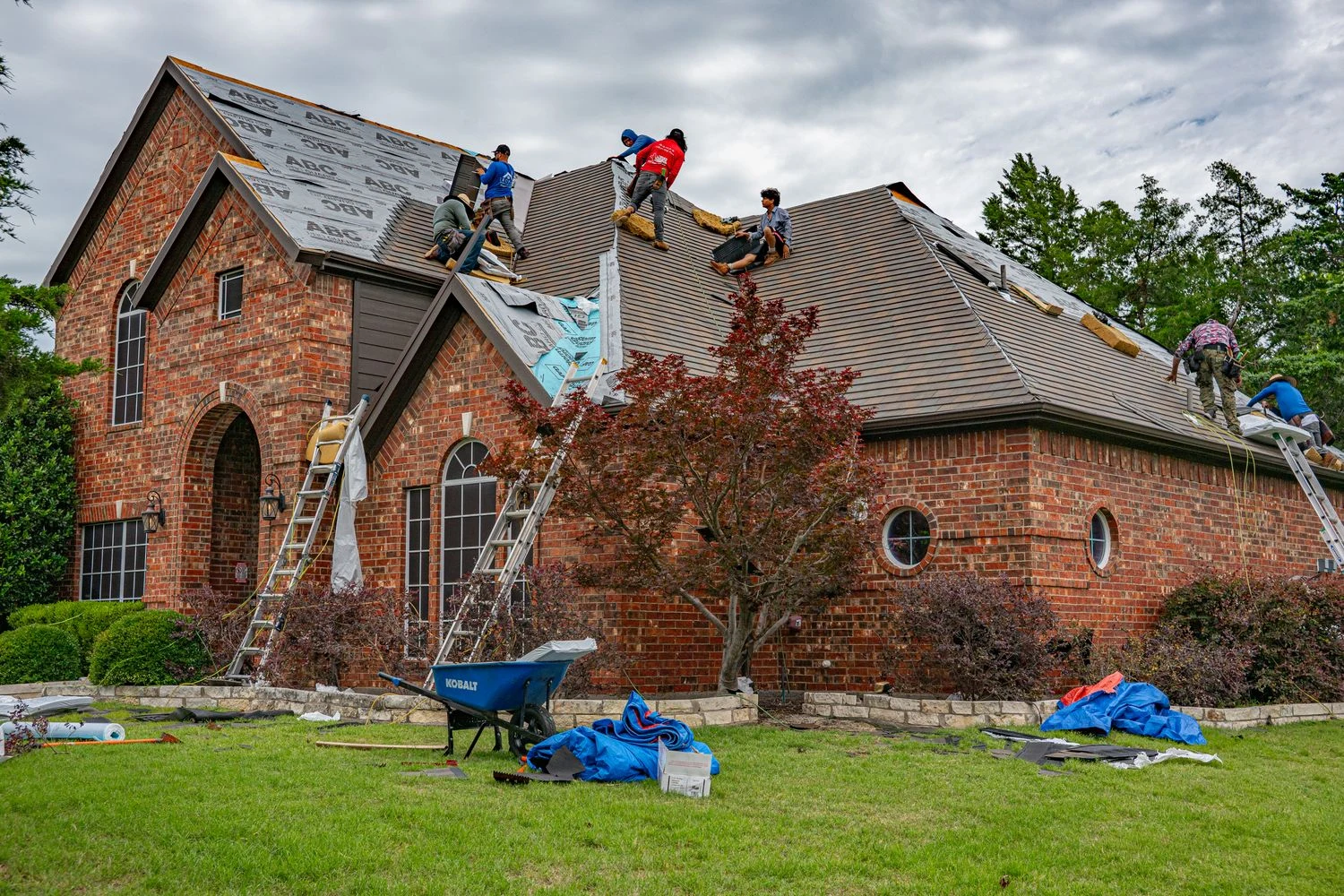
Ask exactly what a proposed temporary measure is intended to do and what still needs to happen afterward. Do not assume that a temporary covering, sealant application or other short-term intervention completes the permanent work. Keep the temporary measure and the final repair clearly identified in your records.
Roof access after a storm can be dangerous. Arrange any temporary roof protection through an appropriate professional rather than climbing onto a wet or damaged roof yourself. GAF's storm-damage guidance discusses professional assessment and temporary protection in the context of storm damage.
If an insurance claim may be involved, ask your insurer what documentation it requires and keep records of damage and authorized work. Coverage depends on the policy and the circumstances. A roofer's inspection does not guarantee a claim outcome, and a website cannot determine whether your specific loss is covered.
When the dripping stops, keep the planned assessment unless you and the roofer agree on a different next step. Dry weather can hide a symptom without changing the condition that allowed water in.
Does a leak mean the whole roof needs replacing?
A leak alone does not decide between repair and replacement; the recommendation needs the roof's condition, affected extent and repair limits.
A localized defect and widespread deterioration can call for different work. Ask what supports the proposed approach, whether the affected detail can be repaired and what that repair would leave unchanged. If replacement is recommended, ask why a smaller repair would not adequately address the findings.
The useful comparison is between defined options. What area would each option address? Which materials would remain? Would appearance differ? What uncertainties remain until work begins? Those questions give you a basis for deciding without accepting either the smallest patch or the largest project automatically.
Read about roof repair or arrange a roof inspection when you need the condition assessed. Keep your observations and earlier paperwork available for the discussion.