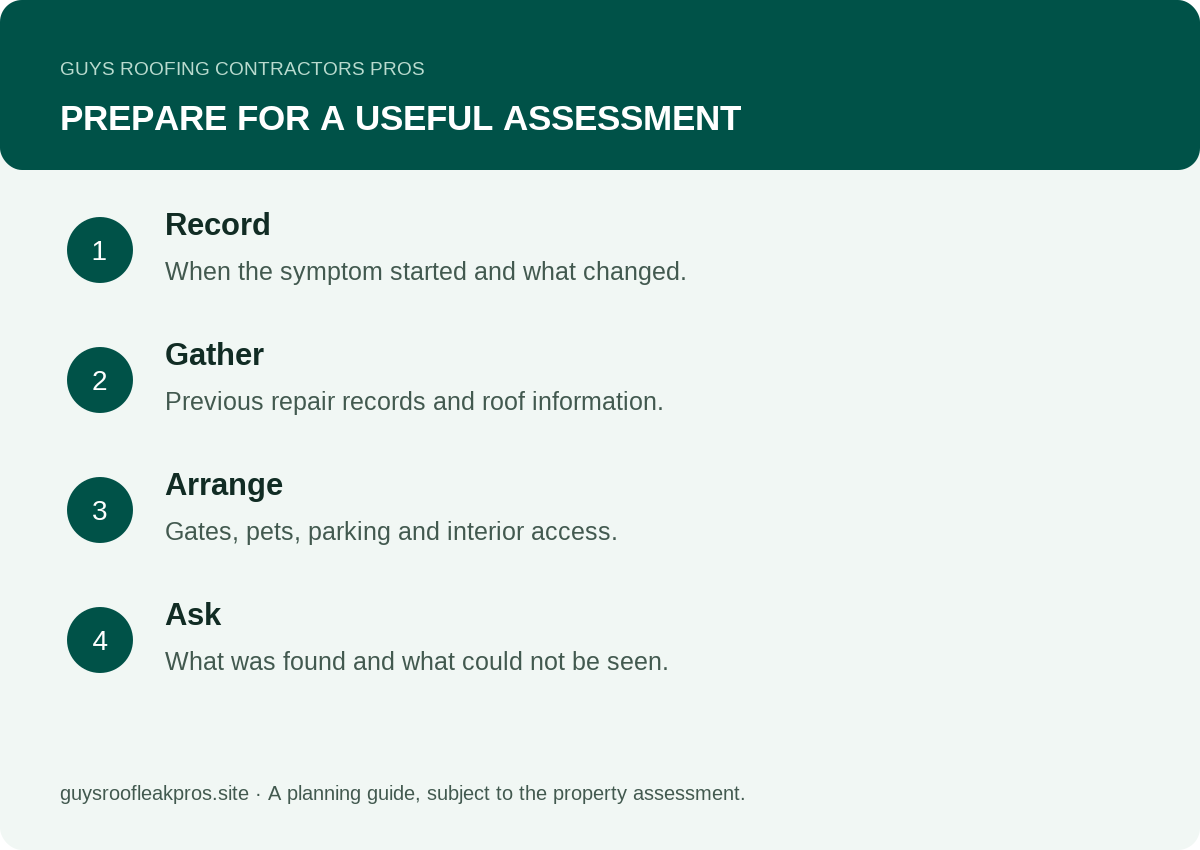
Prepare for a roof inspection by explaining the reason for the visit, gathering earlier roofing records and arranging safe access to the property. Record visible concerns from inside or ground level without climbing onto the roof. Tell the roofer what you need the findings to help you decide, and ask what documentation the visit will provide.
A useful inspection starts with a clear question. Are you investigating a leak, checking a concern after wind or deciding whether to plan a replacement? Those are related needs, but they do not all require the same explanation or paperwork.
You do not need to clear roof debris, climb into an unsafe attic or identify a failed component before the appointment. Your role is to share the history and arrange agreed access. The assessor's role is to explain the findings and the limits of what could be examined.
What is the inspection intended to answer?
State the decision you need to make, so the roofer can explain whether the visit and its documentation address that particular question.
What do you need to decide after the visit? Would a written explanation of a localized defect be enough, or are you comparing replacement proposals? Naming the decision helps keep the appointment focused. It also gives you a way to recognize an unanswered question before the conversation ends.
The Owens Corning roof inspection overview gives a manufacturer's explanation of the subject. Your appointment still needs its own agreed purpose and scope, including any limitations on access and reporting.
Which records should you gather beforehand?
Gather available installation, repair and warranty records, keeping confirmed dates separate from estimates or recollections about the roof.
Useful records can include an installation invoice, earlier repair scopes, photographs, product information and warranty documents. You do not need all of them to make an inquiry. Bring what you have and identify the gaps plainly.
Be careful with dates. A date on a repair invoice does not necessarily mean the entire roof was replaced then. If different roof sections were worked on at different times, note that distinction. A garage addition, porch or repaired section may have a different history from the main roof.
If you know a material or product name, share it with the document that supports it. If you only know that the roof appears to be shingle or metal, say that. Guessing a precise product can create confusion when someone compares the condition with earlier paperwork.
Keep an earlier recommendation available even if you have not accepted it. The new assessor can explain whether the findings support the same work or a different approach. Avoid reducing the comparison to which person sounded more certain; ask which evidence each recommendation addresses.
You can organize the history in a short note: the event, approximate date, roof area and supporting record. Mark a date as approximate when it is. That is more useful than turning an uncertain memory into a definite installation year.
What should you photograph or write down?
Document visible changes from safe locations, with the room or roof area and date identified, without trying to diagnose the cause yourself.
Take an overall photograph first so the location is recognizable, then a closer view if you can do so safely. Inside, note the affected room and whether you see staining, peeling, dampness or active dripping. Outside, use ground-level views for missing material, debris or another visible change.
GAF's roof-damage guide describes signs that can prompt assessment. A sign identifies a reason to investigate; it does not by itself establish the repair scope or prove that replacement is necessary.
Leak or storm damage? Call now Tell us what you see on the roof or ceiling. We book an inspection and give you a written estimate.
How should property access be arranged?
Agree on gates, parking, pets and access to relevant interior areas before the visit, and identify any known hazard or restricted location.
Ask which areas the roofer expects to access and whether someone needs to be present. Discuss locked gates, shared driveways and any building or community access arrangements. Confirm the contact to use if the access plan changes.
Tell the roofer about known concerns such as damaged stairs, an obstructed attic opening or a ceiling that has changed shape. That does not require you to decide whether the space is safe. It gives the professional a chance to plan the visit and explain any limitation.
Weather can affect access and the scope of observations. Ask how a change will be communicated if conditions prevent part of the inspection. Avoid assuming that an incomplete visit and a complete inspection mean the same thing; find out what was examined and what still needs attention.
What can the inspection establish, and what can remain hidden?
An inspection explains accessible conditions at the time of the visit; concealed materials and restricted areas can require further investigation.
A useful report connects the location, observation and recommendation. Ask which roof areas were assessed and whether photographs show the relevant findings. When a detail needs repair, ask what its function is and how the observed condition affects it.
The covering is only one part of a roof system. Underlayment, flashing, roof edges, penetrations and ventilation details can matter to the proposed work. Ask which components are involved in your case rather than assuming every component must be replaced because it appears on a general roofing list.
A report should also distinguish a present condition from a prediction. Ask what supports a recommended next step and what remains uncertain. A website cannot promise a remaining service life for your roof, and a general age estimate does not substitute for the findings on your property.
How do you turn the findings into a useful decision?
Separate observations, recommended work and the contract to authorize it, then resolve the questions that affect your choice before committing.
Start by asking which findings need prompt attention and why. Then ask which items are maintenance, repair candidates or reasons to consider replacement. Those categories should follow the findings rather than become an automatic sales sequence.
If more than one option is reasonable, ask what each would address and leave unchanged. A localized repair and a replacement are different scopes. Compare the affected area, materials, assumptions and limits instead of relying on a label such as basic or complete.
Keep copies together rather than assuming one document covers every stage. If the explanation changes after closer access, ask for the new findings and the revised proposal in writing. It should be clear which version you are considering.
For a longer hiring discussion, use our questions to ask a roofer. To discuss an assessment, see the roof inspection service. Neither a general guide nor an inspection inquiry replaces the terms of the work you actually authorize.